
Small Band, Large Cup Swimwear — 30–40 Bands, DD–H Cups

The combination stores skip. The one we start with.
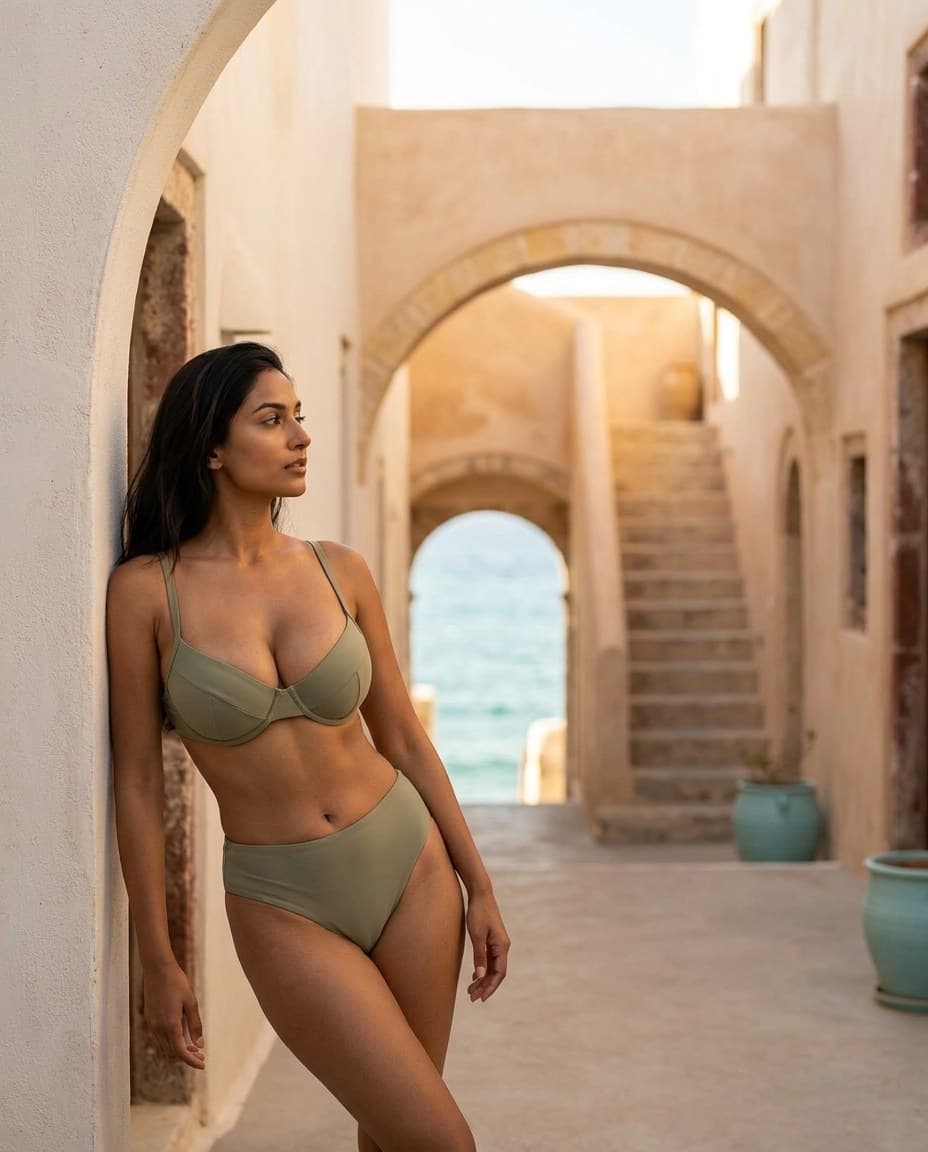
If your ribcage is small and your cup is deep — a 30G, a 32H — you’ve heard “we don’t carry that” in every store that supposedly serves big busts. Mosona’s launch grid starts at a 30 band and runs cups DD through H, because the small-band, large-cup woman is this brand’s center — not its edge case.

Model with a narrow ribcage and very full bust in an olive underwire bikini, standing in a warm arched stone passage by the sea

Why is a small band with a large cup so hard to find?

Because most brands cut one cup shape and grade it: as the band grows, the cup grows with it. That process mass-produces 36DDs and never once yields a 30G — the combination only exists when band and cup are engineered separately, size by size. That separation is slower and more expensive per style, and it is exactly the work Mosona set out to do.

What is the sizing-up trap?

It’s the advice every small-band woman has been given at a rack that stopped short: “just go up in the band for the bigger cup.” The trade never works — the loose band rides up, the straps inherit the weight and dig in, and by afternoon the suit has migrated. Linette watched that trade fail across the fitting-room counter for over 20 years. A cup that fits on a band that fits is not a luxury request; it is what sizing is for.

What do small-band, large-cup women ask us?

Whether the deep-cup small-band grid is real, why sizing up keeps failing, and what sister sizes can and cannot do — the four questions below arrive almost daily from women with a small frame and a full bust. Each answer is complete on its own and written the way a fitter would say it across the counter.

Does Mosona actually cut a 30 band with deep cups?

Yes — the launch grid runs bands 30 through 40 against every cup from DD through H, no gaps and no "call for availability." A 30G and a 32H are drafted patterns in the line, not special orders. If your size sits outside the grid, the waitlist is where to say so: size counts decide what gets cut next.

Why does sizing up the band to get a bigger cup fail?

Because the band is the anchor. Take a 36 to reach the cup you need and the band rides up your back, the straps inherit the load and dig, and the cups tilt away from your body. About 80% of support comes from the band, so a band two sizes too big supports almost nothing — however roomy the cup.

Are sister sizes a real fix for small-band large-cup bodies?

They are a workaround, not a fit. A 34DD holds roughly the same volume as a 36D, but the geometry changes: the wire sits wider, the band grips less, the straps sit differently on the shoulder. Useful in an emergency, costly as a habit — the real fix is a brand that cuts your actual combination.

How do I know my real band and cup before ordering?
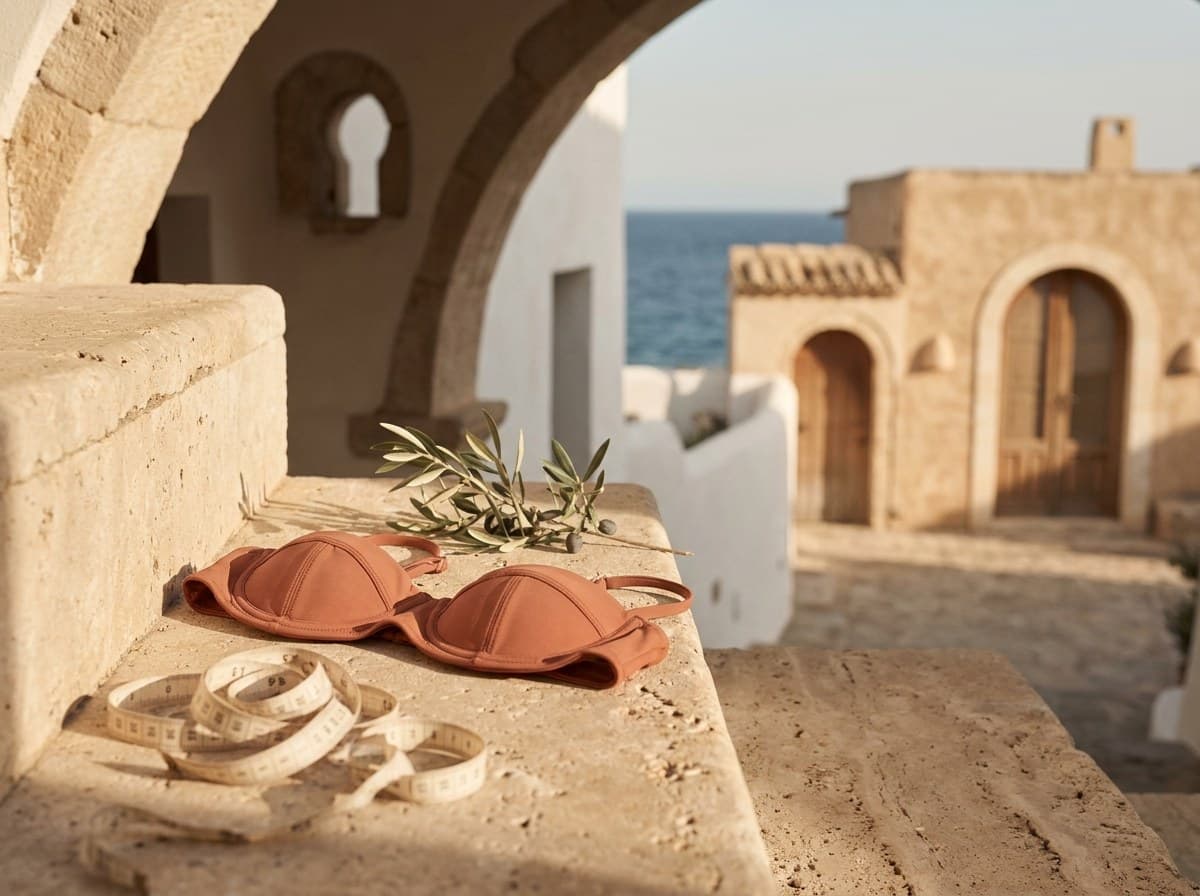
Two tape measurements and about 2 minutes: snug around the ribcage directly under the bust, then level around the fullest part. The free calculator applies the method Linette uses in real fittings and flags whether your result is inside the launch range — and if it is not, telling us is how the range grows.

Structured terracotta underwire swim top beside a coiled tailor's measuring tape on warm travertine stone

Not sure of your size? Two measurements settle it.

A tape, a mirror, and about 2 minutes — the calculator turns your underbust and bust measurements into a starting bra size, and tells you if it’s in our launch range.

Find your size